I love the idea of an inquiry project to learn something. I decided to continue my pursuit to learn the harmonica. My brother purchased me my first harmonica in grade 9 for Christmas because I had heard a friend of his play the Star Wars song on the school bus. I felt that it was a cool instrument, and you could carry it in your pocket and play anywhere. So, I learnt the Star Wars song by apparently a very annoying process, according to my family. Since the Star Wars song, I have learned a total of 6 more songs and 2 riffs. I was 14 when I received my harmonica, and I am now 26 years old. That means I averaged learning about 58% of a song and 16% of a riff per year over the course of 12 years. So, by the end of the project, I would like to learn at least 1 riff and 1 song. I feel that a task with a goal in mind and an end date is an integral part of goal-setting. I am happy to be stepping back into a learning routine with a cool instrument. I figured that to learn something, it is best to use the community, so I reached out.
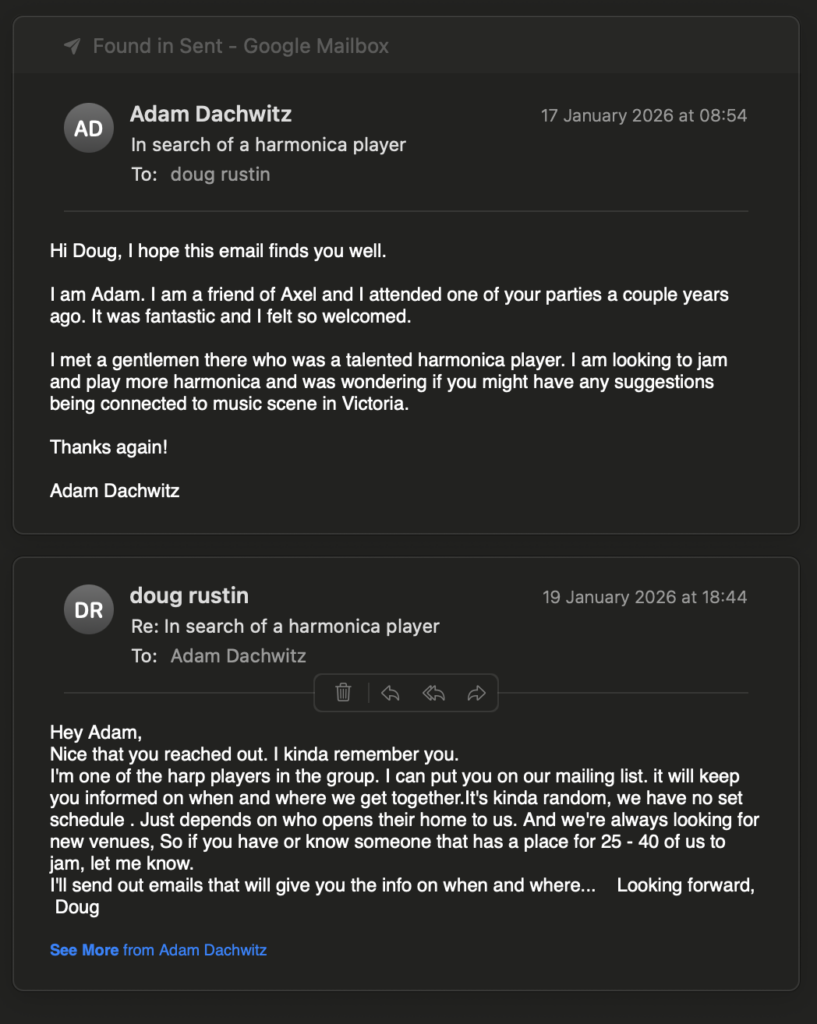
So about 2 years ago, I stumbled into a party hosted by a friend of mine’s landlord. Turns out it was a party of roughly thirty people who were all above the age of seventy. The vibe was something out of Woodstock, it seemed. There were about 14 of them jamming in the living room. The rest were dancing with an essence of love, zero judgment of others. Being so young, I felt odd at first, but they were so welcoming. I immediately saw that one gentleman was playing the harmonica very skillfully and adding to the jam so elegantly. I approached him to chat after the jam and talk about harmonicas. Turned out he had a full case of harmonicas in all keys with him. After our chat, I learned from the host of the party that they do this regularly, and they added me to their email list. I always got the email but never managed to get to a party, and this time I figured I would give it a try. So below is my first attempt at reaching out and I plan to hopefully meet with them to jam and learn a thing or two more.
Out With The Old and in With The New: Inquiry Post #2
I decided in my learning process that the harmonica may not be the best suited for me during this inquiry process. I decided to shift my focus to a practical learning experience and apply it to the ADST curriculum. This is a valuable way to shift learning from a traditional setting into the real world. I personally value everything I learn from doing anything with Applied Design, Skills, and Technology. I feel a degree of creativity and pride in the work and the ability to make or fix something using the learning and inquiry process. I hope to become a shop teacher and work in the Ed Tech world to promote and teach technical skills and their benefits. So, in this turn in the inquiry process, I aim to share my learning in general fixing of electrical parts of lamps, speakers, and several wood-related crafts, and how working with our hands and fixing old things saves us money, saves the world, and builds community through shared learning skills from others in the community.
Inquiry 3 Light Bulb! The Lamp Dimmer to Inspire How to Make Change and Fix
To start my journey into the ADST world, I began by purchasing an old lamp from Value Village and installing a light dimmer on it to help me sleep better. The trick part of this process was sourcing the materials locally. I inquired about a specific style and colour of dimmer and found one on Amazon. I did not want to offset my environmental footprint when trying to restore and do a meaningful project, so I decided to look at local lighting stores in Victoria. Luckily, after about 6 phone calls and paying $13 more than Amazon, I got my dimmer. The process was simple and only required wire cutters and a Phillips screwdriver. Although I did have to research the bulb application to the dimmer, so I knew it would not get hot and burn out right away. I used a beautiful 4” halogen bulb. You can use a similar lesson about school improvement below. It is about getting students to come up with prototypes of their ideas of things they would build to improve the school. I believe adding dimmers to classrooms to help regulate students stress. Bright blue light is not good stimulation and getting students in the zone of proximal development.
https://www.education.com/activity/article/design-challenge-improve-the-school
Inquiry #4: Pallet Wood Screw Driver Holder
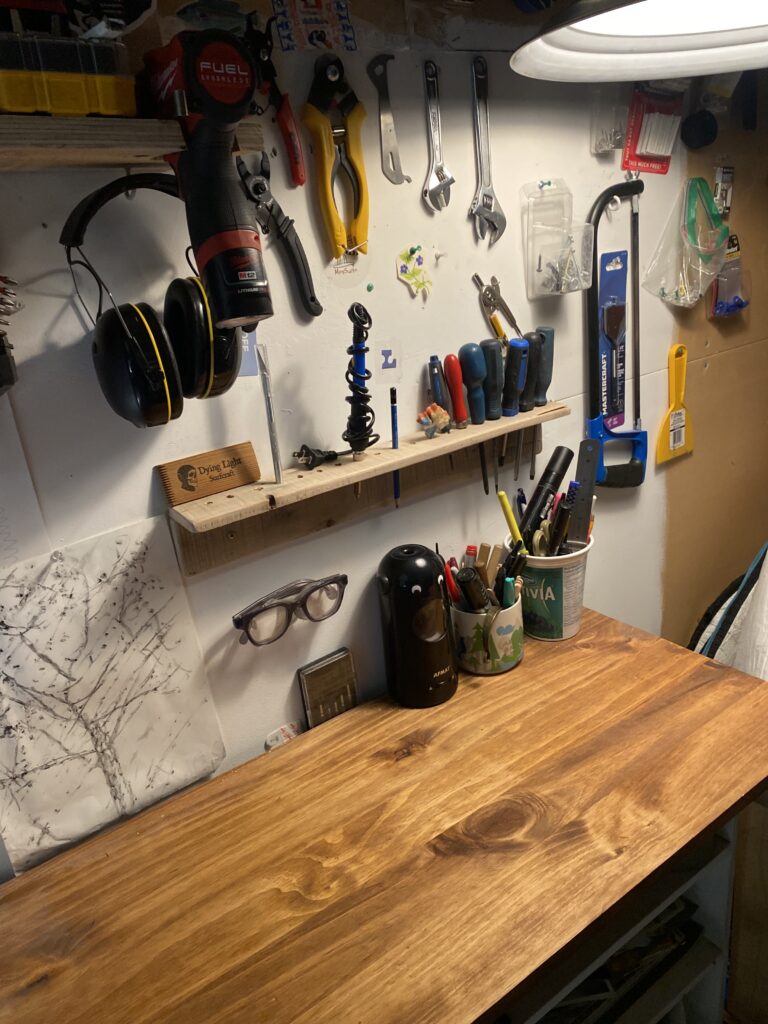
My next idea in my pursuit of learning ADST-related knowledge was to help organise my tools better. I decided to make myself a screwdriver holder above my small workbench in my furnace room, where I store my tools. I decided to stay on brand with recycling scrap material and decided to repurpose some pallet wood. I found these pallets at the tile store up the road from my house, and now the rest of the scraps kept my neighbor’s house warm for a couple of days over the winter. I simply measured the surface above my workbench, marked the studs with a pencil, and got to cutting some wood with my skill saw. I did some sifting through my stack of wood after disassembling the pallets and had to find the best quality chunks. I measured both to 21” and then drilled pilot holes in the board and used 1 ¼’ screws. I then took a palm sander, made it all smooth and such, and then I was ready for drilling holes in the wood for screw drivers! I got 19 holes done to fit a lot of screw drivers and other devices. I am happy with the result. This is a product that only took an 1hr to build as a study break and helps me be more organised, was free, reduced waste, and let me help a neighbor as well as help me get rid of bonus scraps. Similar projects, like building small things for daily use, are impactful and so meaningful because of the practicality and pride associated with getting to use something you made every day.
Inquiry 5: A Picture Frame for Freyja
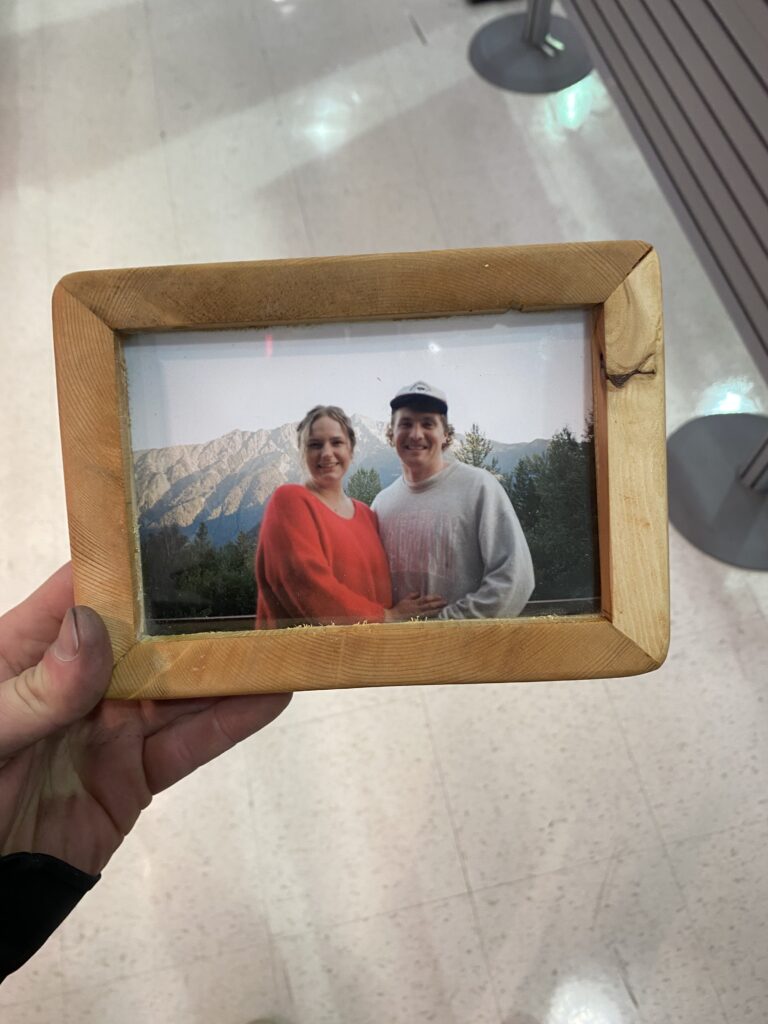
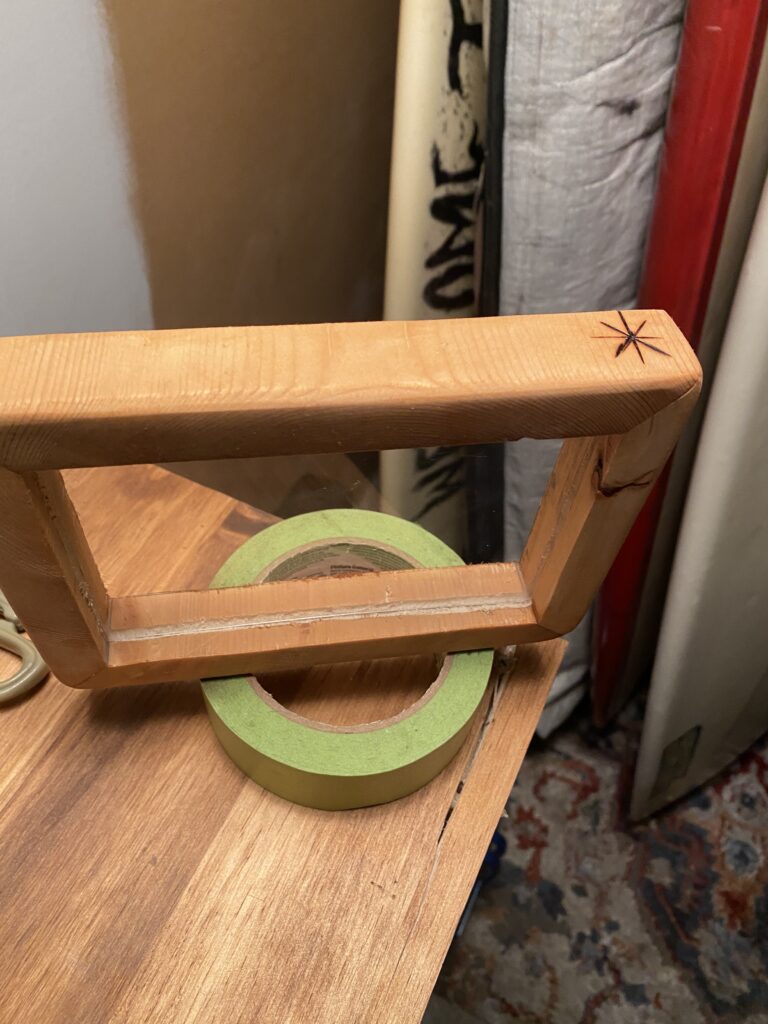
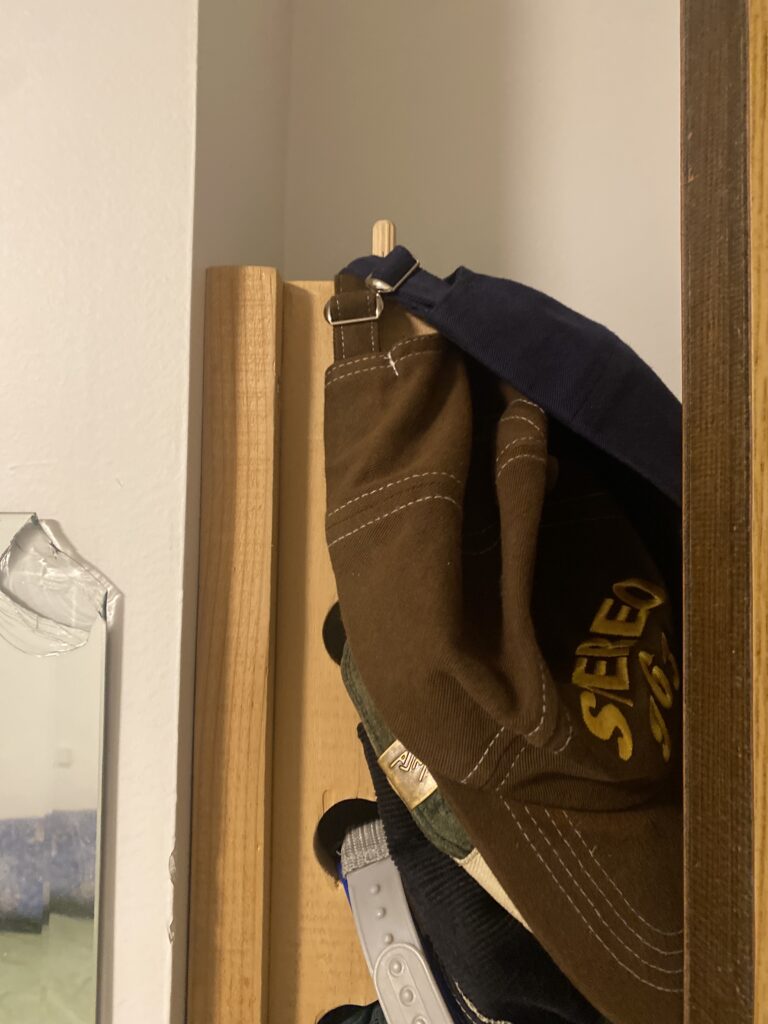
This post is a little sappy, as this is part of the inquiry I decided to make a gift for my girlfriend, Freyja. The art of gift-giving is interesting. I believe a gift that is handmade should not be too big to hold unless it is something really special. In teaching ADST, I want to reflect that in my teaching by telling students that giving a gift no bigger than one can hold means you’re not burdening someone with a large piece that might not work for their space. Making small objects like jewelry boxes and picture frames, or fridge magnets, is a really great way to make something practical and useful. So I decided to make a picture frame. The concept was to make it so it can stand up on its own with no kickstand, so the frame can be placed anywhere, as well as hung up with a simple tack. Then, as well, it had to fit 4×6 pictures, which are standard film size. I used plastic sheets I got from Home Depot for the panes, and the plastic makes it so it is not easy to break. I used scrap pine from my workbench at home. The process is hard to explain because it took several tries to get my 45-degree cuts just right. I cut the dado for the pane first at 1/8th deep and then cut a long piece of 1” for the edges, and they already had the groove. I had to do it that way because I was using a skill saw. I then glued it up with wood glue and masking tape and wood-burned my logo into it. She loved and I received a gift back from her, which was a hat rack for my room, which I modified with a wooden dowel to add one more rung for more hats! I think gift giving is a great way to learn design and get ideas because you are constantly thinking of the person you are making for. I truly believe that when projects have momentum, you have a vision and understand the steps to make it thoughtful.
Inquiry 6: Towel Rack for Jordy and Me!
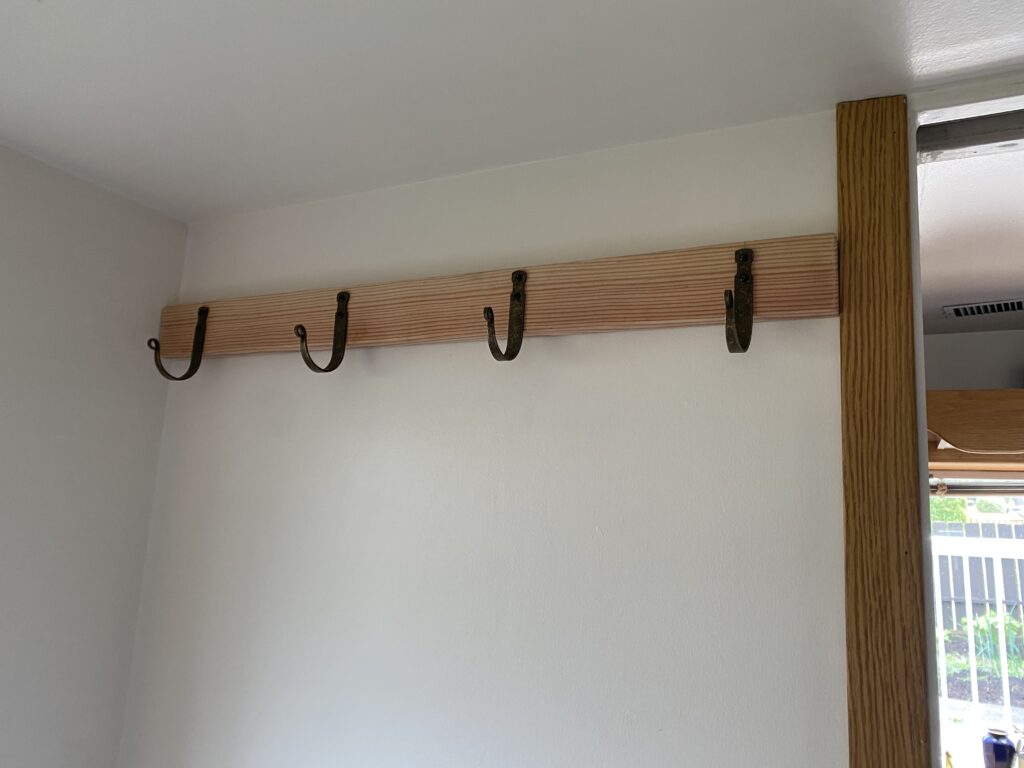
The next little project I took on was an upgraded towel hook rack. I only have 1 roommate, and we have one towel bar. So our towels would touch one another. So, to update our little bathroom, I decided to reach back in childhood memory and design a towel rack similar to the one I used in my childhood home. I used another piece of scrap wood I received from my old boss, a beautiful piece of cedar wood. With 4 hooks, I purchased them on Facebook Marketplace from someone moving out of the city. I wanted to match the cabinets of my bathroom, so I applied a light coat of beeswax to tinge the cedar a little bit. I even used AI to do the math to divide the wood evenly to get the spacing of the hooks perfect. It allowed me to cover up the wall mounting screws and cover them with the hooks, so it looks oddly seamless. In teaching design to help solve complex issues, I would argue that using AI helps solve time-consuming tasks significantly and makes this project not feel like a misfire. I think this makes designing more fun and approachable for all learners. It helped solve an issue I was struggling to solve on a calculator. It is important to recognise flaws in the design process, and learning is takes failing a lot to cement in knowledge. As a teacher, it is important to embrace those flaws with grace and appreciation and remember it is all part of the fun!
Inquiry 7: A New Faucet and New Skill Unlocked
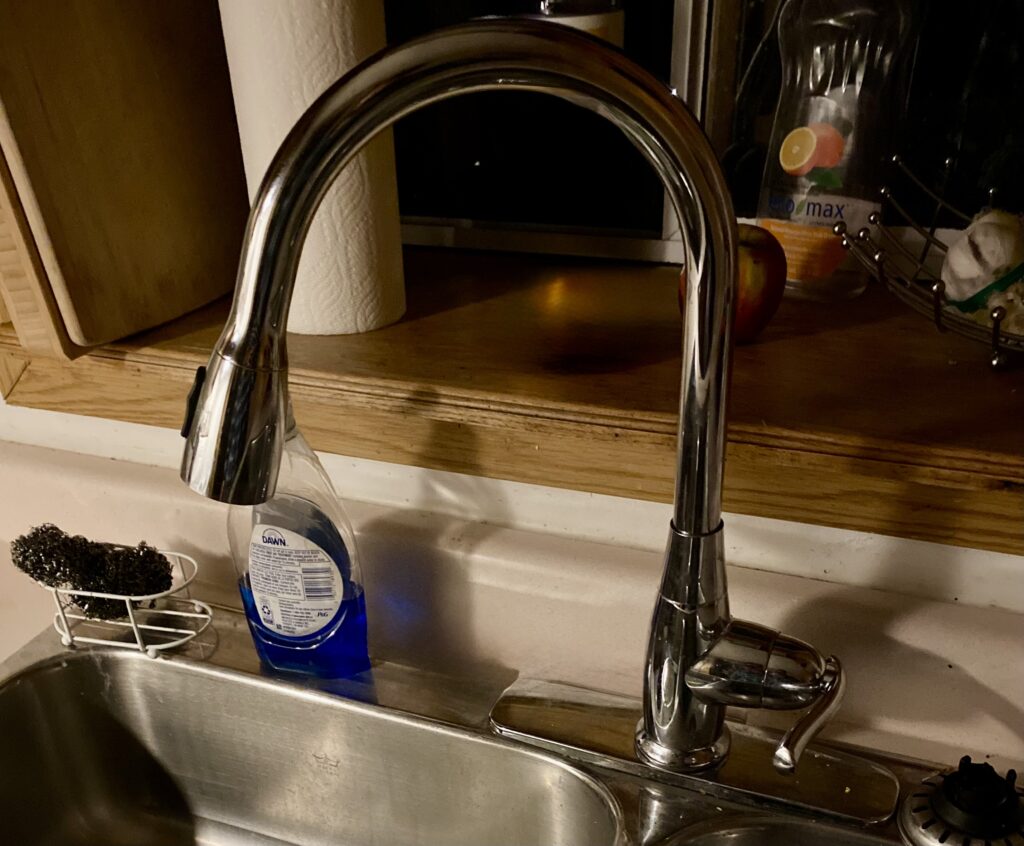
This was a new avenue of learning for me, but a totally practical and beneficial job to do. The project fell into my lap from my girlfriend. She purchased the faucet as she wanted an upgrade from hers, which had no sprayer function. Unfortunately, the faucet was too tall for her kitchen, and she asked if I would like to install it at my house. I agreed, but the part of the learning process I wanted to touch on when attempting projects and new learning is communication. Many levels of communication, permission, and trust have to happen, and you have to trust yourself that things can go wrong and you’re comfortable admitting if you made a mistake. In this process, I had to talk to my landlords, who have a newborn and live upstairs. I asked for permission first before attempting to replace the faucet. They said yes. Let us know if you have any issues. I also then asked if they would like to buy the faucet from Freyja, or if they would like me to store and reinstall the old one when I move out in the foreseeable future. They agreed it was a worthy upgrade and thanked me. I felt great and had the opportunity to do a project with my girlfriend and learn a new task.
Firstly, we cleaned and turned off the water before we removed the old faucet. The old one came off easily, and with a bit of scrubbing of all the grime after the removal, we were set to install the new fancy sprayer faucet. The process was straightforward in installation, and the faucet fit perfectly. The spray faucet worked great. Although I was checking the new piece for how tight it was and noticed it was bending the metal of the sink, and I thought that was strange. I remembered there was a big washer around the old faucet, dispersing the weight of the clamping fixture. So, I had to disassemble everything and redo it. I felt at first annoyed and remembered that I must give myself grace because this is a learning process after all.
The whole project with cleaning dirty water and grime from the old faucet took about 1.5hrs and we were washing dishes happily. I think ADST in general can be a lot of personal creativity, but I think it is important to manage communication to avoid conflicts impeding the project. We need to be honest with our work and own our mistakes so we can all carry on in our learning journeys.
Inquiry 8: The Final Boss, Speaker Rebuild, and Capacitors.
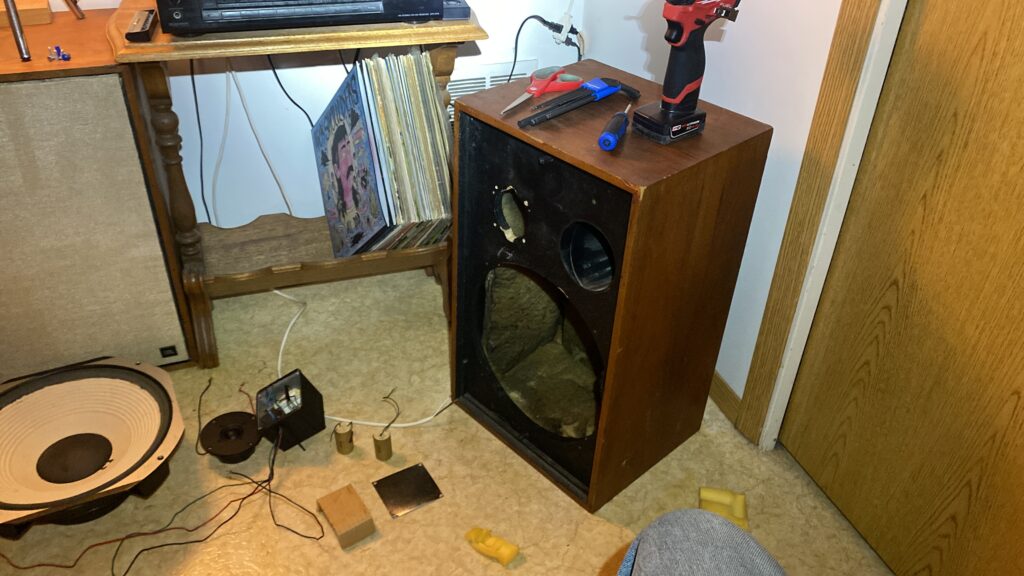
During reading break this semester, I stepped into a territory where I had very minimal experience. I received a set of 1970’s JBL S99 Lancers from my uncle Doug. They are a big old speaker with 14” subwoofers. My uncle used these speakers frequently and blew out the part of the speaker called the tweeter. Responsible for producing the high-frequency signals in a speaker, and the subs are for the low frequency. So, I replaced and fitted the new tweeters. I purchased them from a local retired sound expert who commutes from Salt Spring Island once a week. Aaron is a good friend now; he is 64 years young and loves to help and teach others who are curious and share a passion for making old things work. I often have an email thread with him, more than 30 emails long, asking different questions about sound gear. Learning takes passionate people like Aaron, passing on knowledge to the new generations to continue learning and growing in others. Because of Aaron being so kind, I was able to participate in a hobby that once felt gate-kept by audiophiles and wealthy old guys.
Because of Aaron, I was able to fix these speakers. Aaron taught me about the capacitors in the control panel that help filter the electric waves of sound to the actual speakers. I tested them with a micrometer and figured out the ones from the 80’s were blown and needed replacing. He even told me which capacitors to buy. He encouraged me and gave me confidence, and I managed to tackle and finish the job. Aaron did not charge me anything and will still update me with his projects around his house, sound-related, or virtually anything. Learning comes from building community, and I aim to spark curiosity and help students in their creative pursuits to help in their learning processes as well. Below is a before and after!